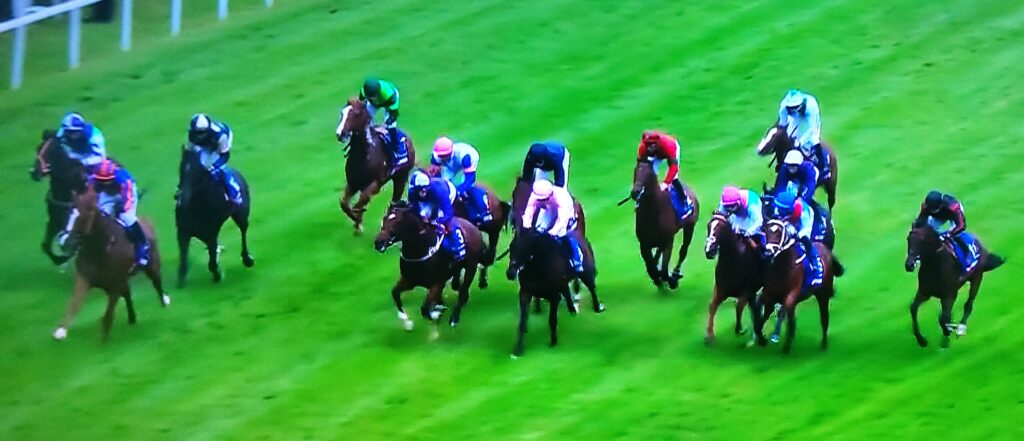
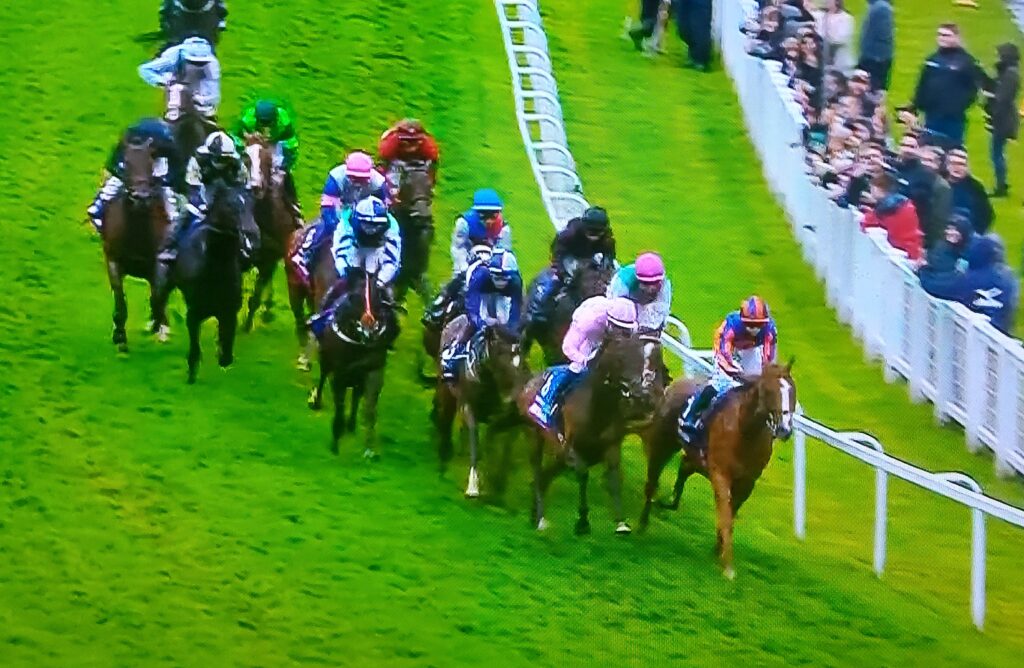
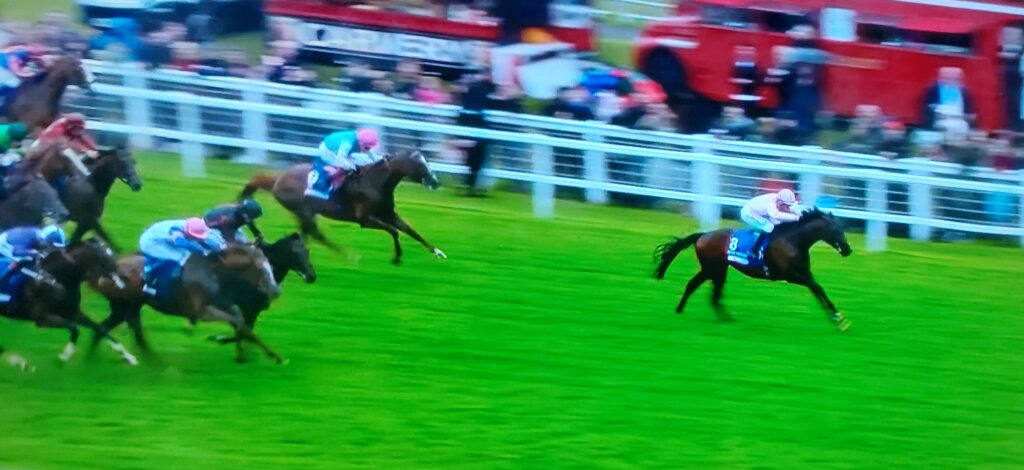
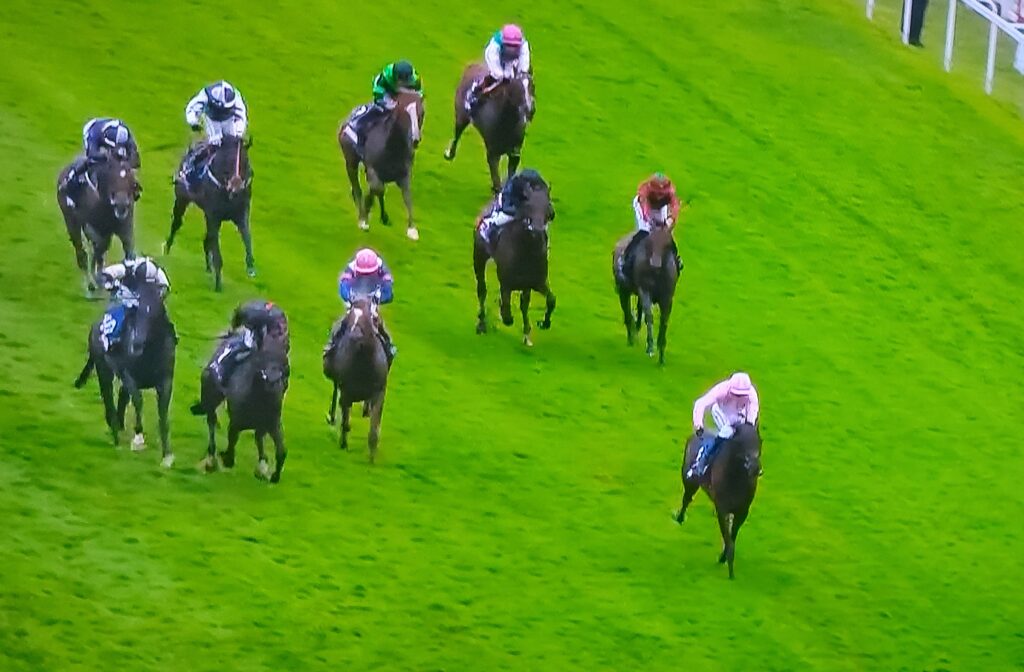
Grey is the colour, Racing is the Game
** 1 **
The Grey Gene
WITH the exception of a tiny minority, who trace to a grey son of the Brownlow Turk, every grey thoroughbred we see today derives his greyness, generation by generation without a single break, from the Alcock Arabian (gr.c. 1704), who was also known as Pelham’s Grey Arabian.
The colour of the Alcock Arabian was, as it is with all other grey thoroughbreds, not a true colour. The greyness is a deficiency that causes the coat to ‘silver’ with age, until a foal with a ‘gun metal’ colouring slowly turns white in appearance.
The greyness in fact, has only a masking effect which, when transmitted, dominates the basic colours of bay and chestnut. It is therefore inherited together with the basic colour genes, not instead of them.
No grey horse has ever been born without one of its parents being grey, the deficiency being transmitted only from the parents to the foal.
It follows that bays or chestnuts mated together have never produced a grey, even though their parents might all have been greys. It must also be noted that two grey parents will not necessarily produce a grey foal, unless one of them has inherited the greyness from both of its parents.
Having set out the rules of nature, the percentage of grey racehorses has generally hovered around 3%.
This figure is backed up by taking an extract from all the Classic races and Champion Sires. Even so, in the decades before The Tetrarch, it was predicted in time there would be no grey racehorses.
As with other forms of predictability, this low percentage indicates that success is generally unpredictable. For example, in more than two centuries only four winners of the Derby and four winners of the Oaks have been grey. The latest Derby winner being Airborne in 1946 and the latest Oaks winner, Sleeping Partner in 1969.
This set against the One Thousand Guineas, first run in 1814 with 13 grey winners, the first, Tagalie not appearing until 1912. And the St Leger with 11, yet none between 1798 and 1920.
There can be reasons for this. In some cases where an exceptional grey horse, such as The Tetrarch, will go on influencing pedigrees for generations.
** 2 **
Alcock Arabian (gr.c. 1704)
Returning to the Alcock Arabian, although said to have been imported via Constantinople by Sir Robert Sutton, evidence now exists that the Alcock Arabian may have been sired by the Curwen Bay Barb out of Sir John Parson’s Old Wen grey mare, a sister to Clumsey.
In 1722, the Alcock Arabian was purchased by the 2nd Duke of Ancaster, and progressed to be Champion Sire in 1728 .
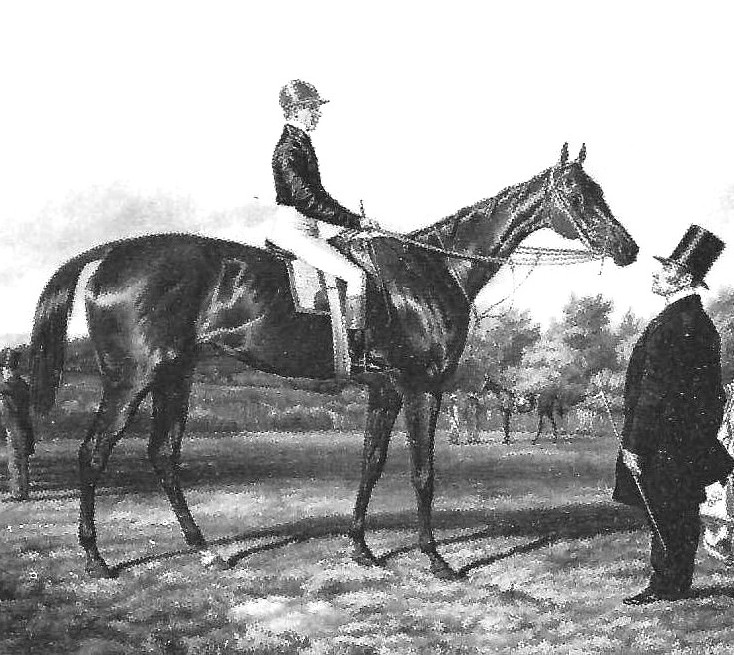
His most Notable Progeny was CRAB gr.c. 1722 (below) ex sister to SOREHEELS by BASTO.
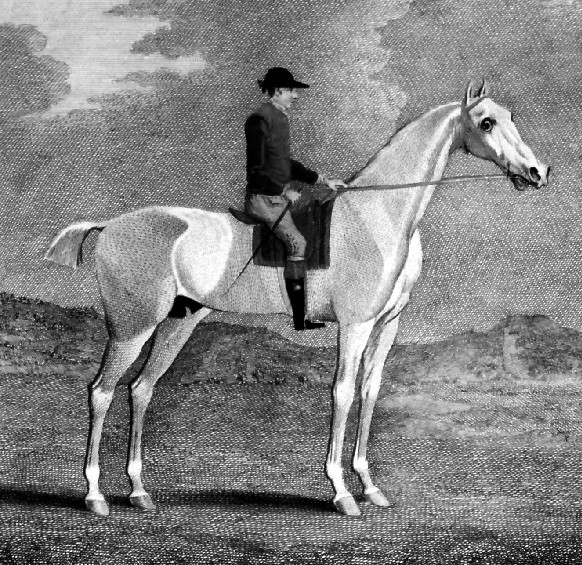
CRAB was bred by Charles Pelham of Lincolnshire and later purchased by Mr Cotton.
He was “a horse of size and strength”. He ran only as a six and seven-year-old and won five races, including a King’s Plate at Newmarket.
After retiring to Thomas Panton’s stud, Crab became the Champion Sire for three consecutive years; 1748, 1749 and 1750.
Among his best progeny was Spectator (b.c. 1749), who won the 1756 Jockey Club Plate, beating Brilliant and Matchem, and later became the broodmare sire of the first two Derby winners – Diomed in 1780 and Young Eclipse in 1781 – and the grandsire of the 1785 Derby winner Aimwell.
Crab died on Christmas day 1750, aged 28 years.
** 3 **
The Tetrarch (gr.c. 1911)
The unpredictability of the grey gene referred to earlier, is no more evident than with the emergence of The Tetrarch.
Bred by Mr Edward Kennedy at the Straffan Stud in County Kildare, The Tetrarch was born in 1911, sired by the grey French bred stayer Roi Herode. Mated to Vahren, a 14-year-old mare that had won three small races, it was noted that she was a shy breeder – a trait to be inherited by The Tetrarch.
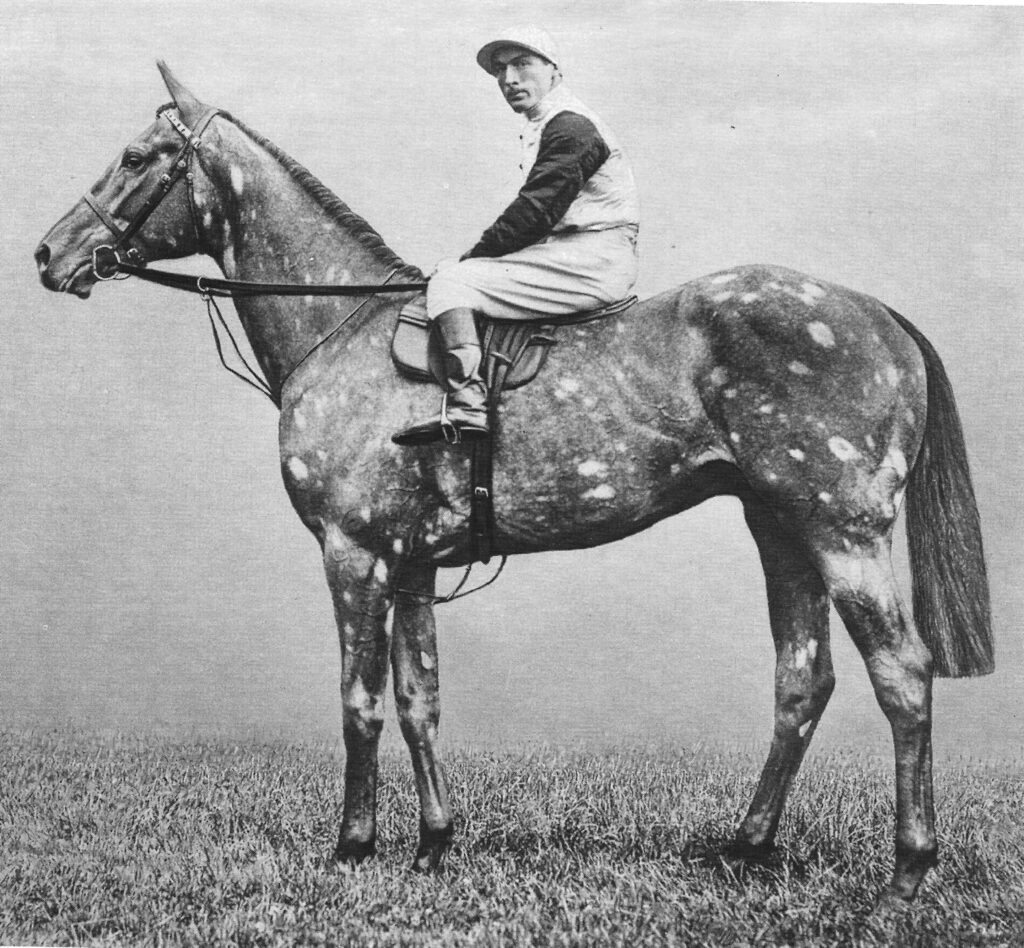
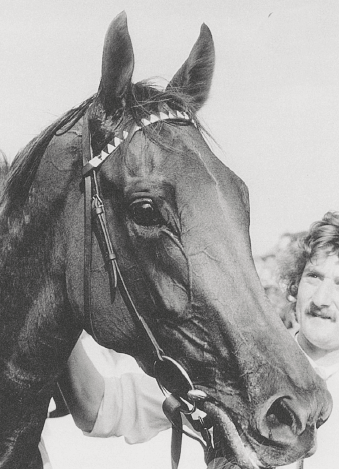
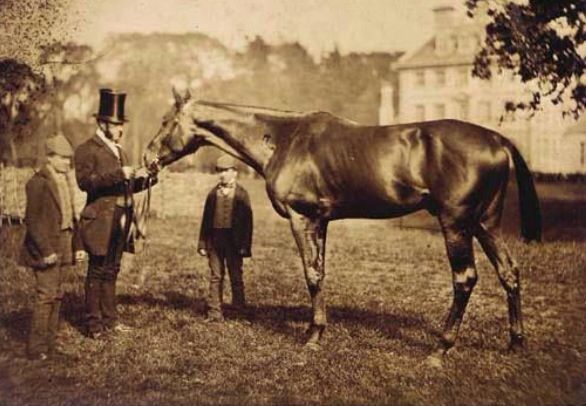
THE TETRARCH was born a chestnut with black splodges, however, by the time trainer Atty Persse had bought him for 1,300 guineas at Doncaster’s Yearling Sales, the chestnut pigment had turned to gun-metal grey and the random egg-shaped splodges to white.
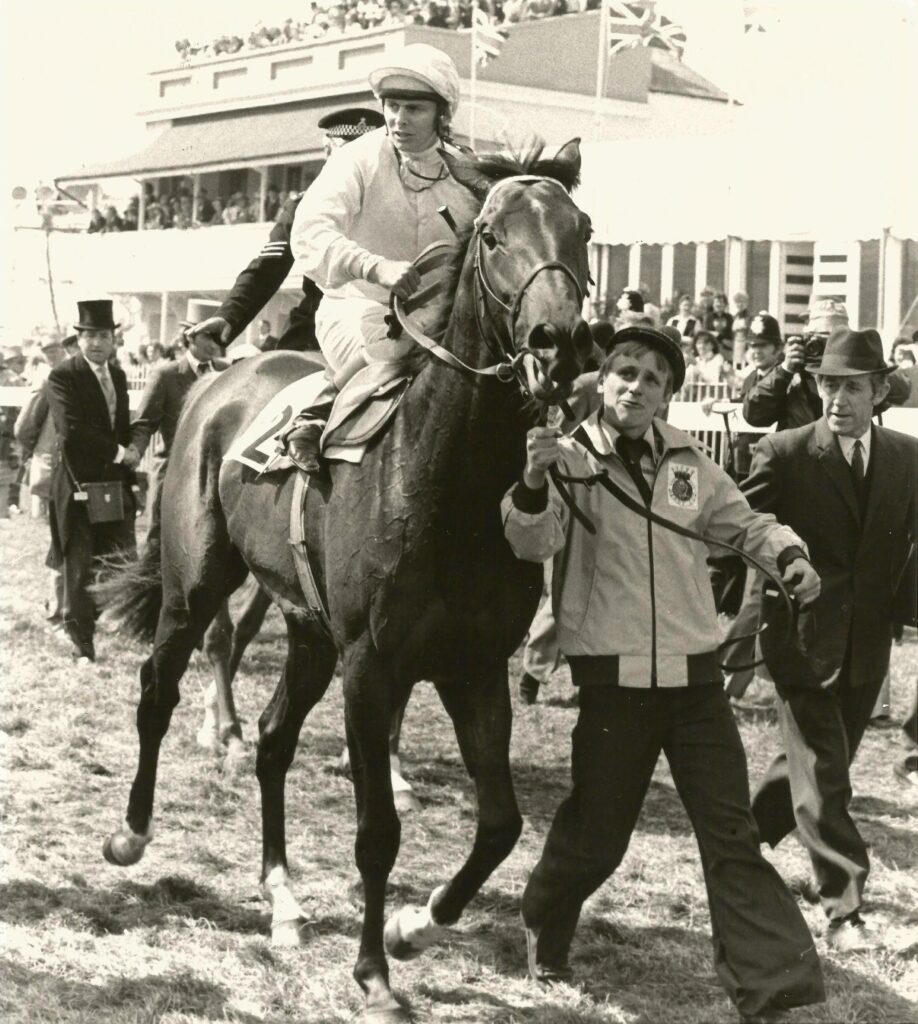
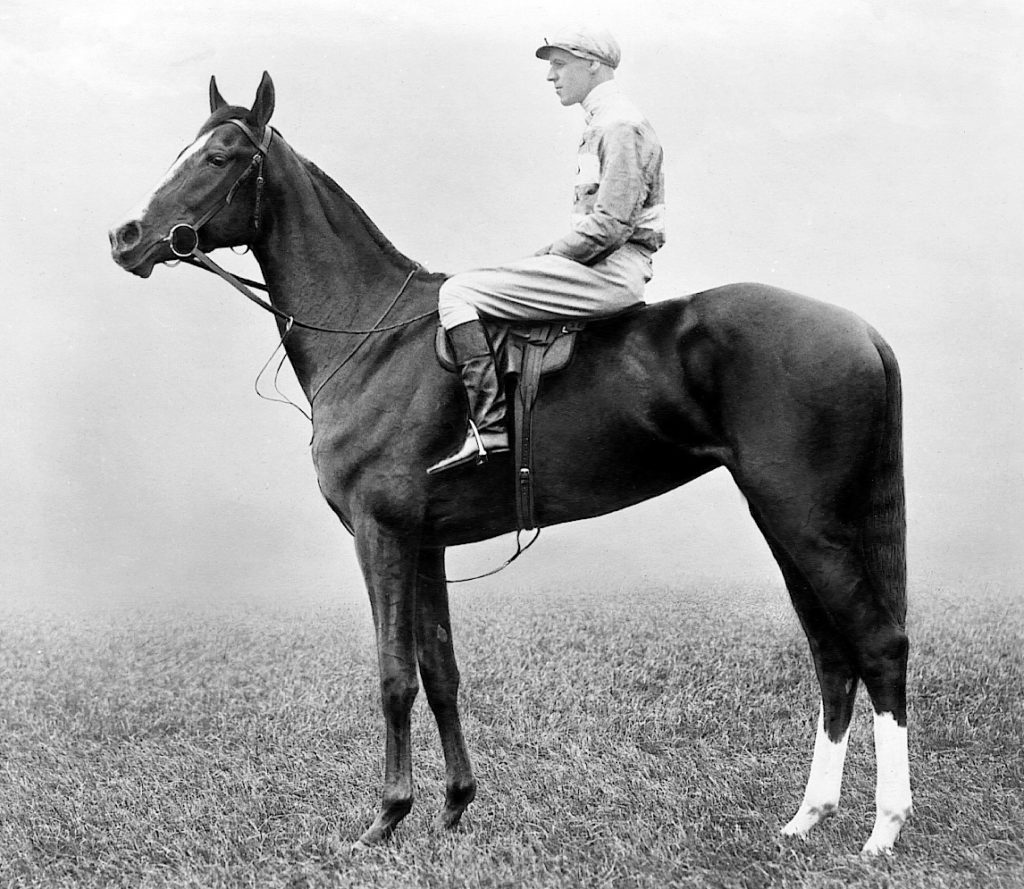
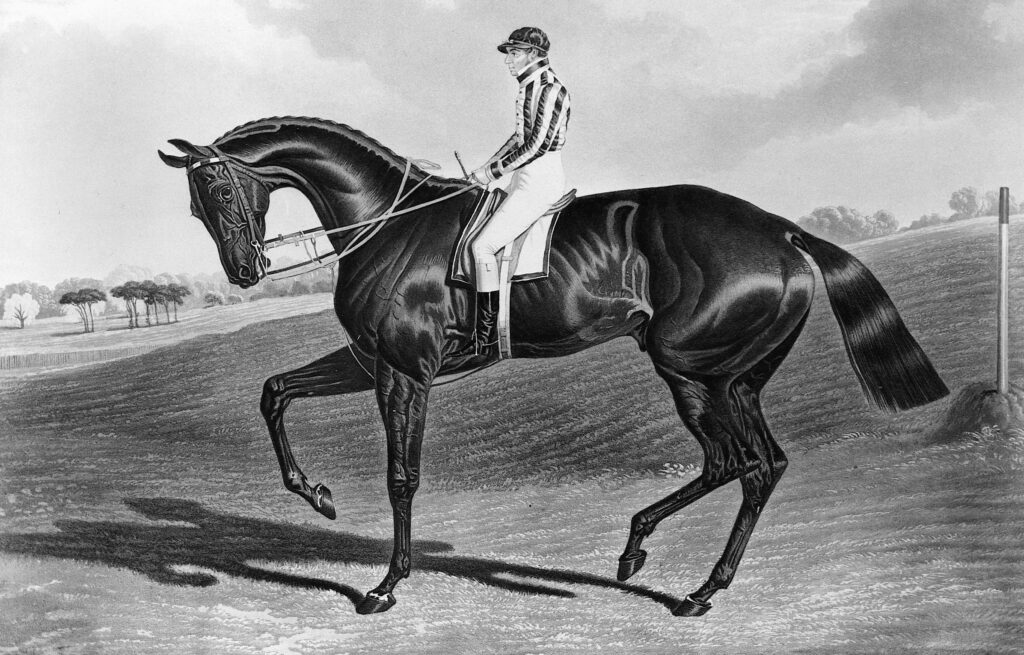
STEVE DONOGHUE (seen aboard) said of The Tetrarch, “He was without doubt the fastest horse that I ever rode, and probably, the fastest horse that ever ran on the Turf.”
Having passed on The Tetrarch to his cousin Dermot McCalmont at cost price, Persse set about training the colt on his Stockbridge gallops in Hampshire. The results were spectacular, and so must have been the stable security, for when The Tetrarch won his maiden at the Newmarket Craven by four lengths in a canter, he did so at generous odds of 5-1.
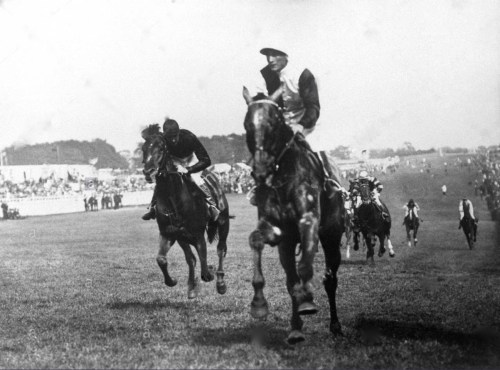
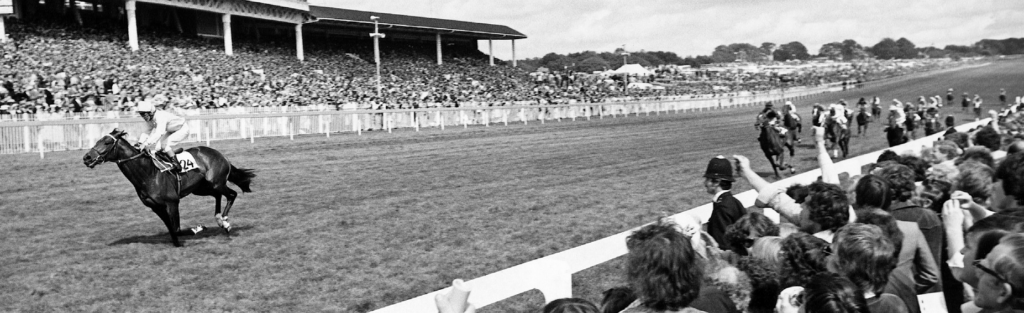
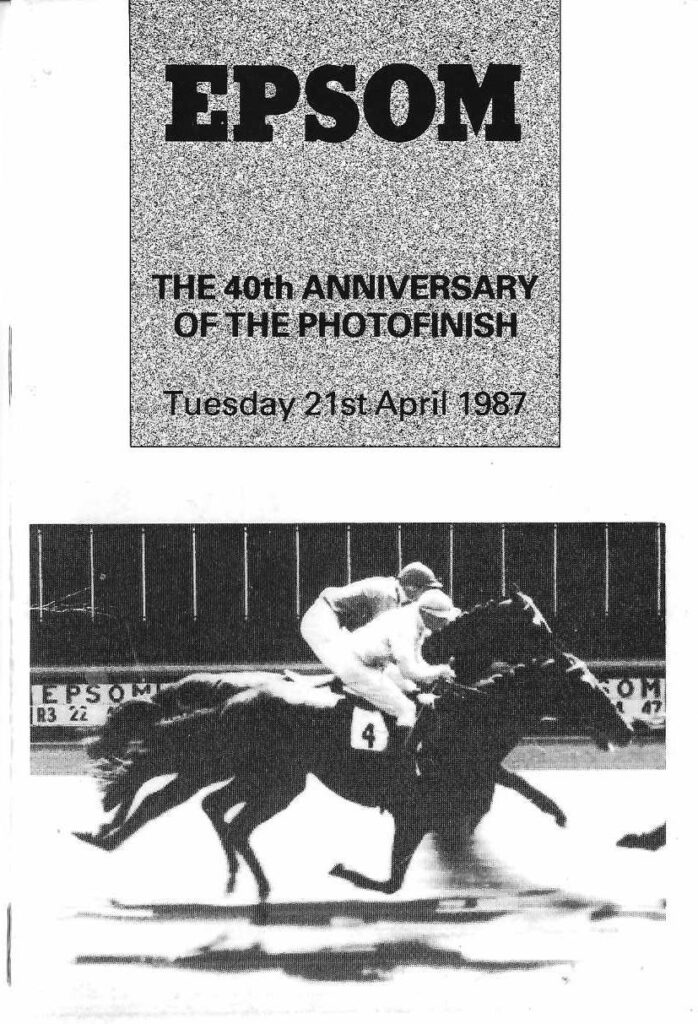
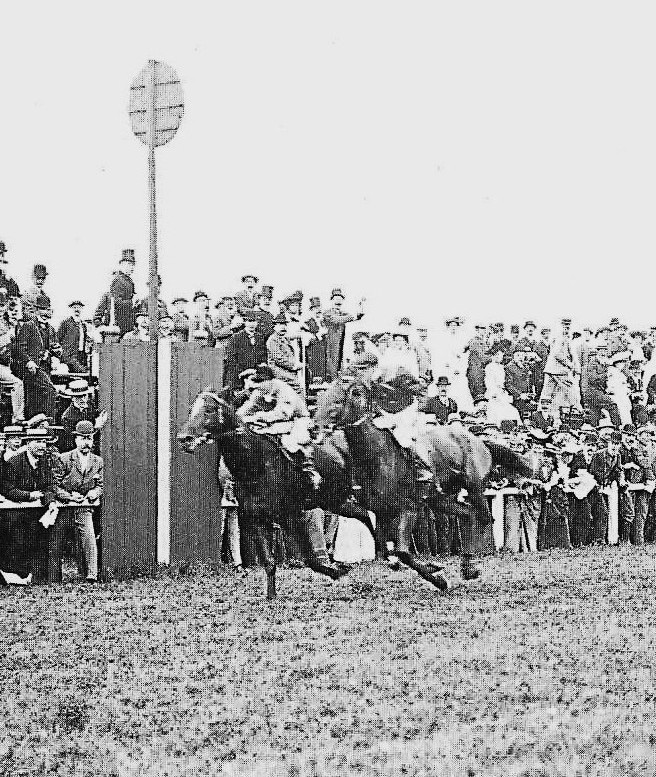
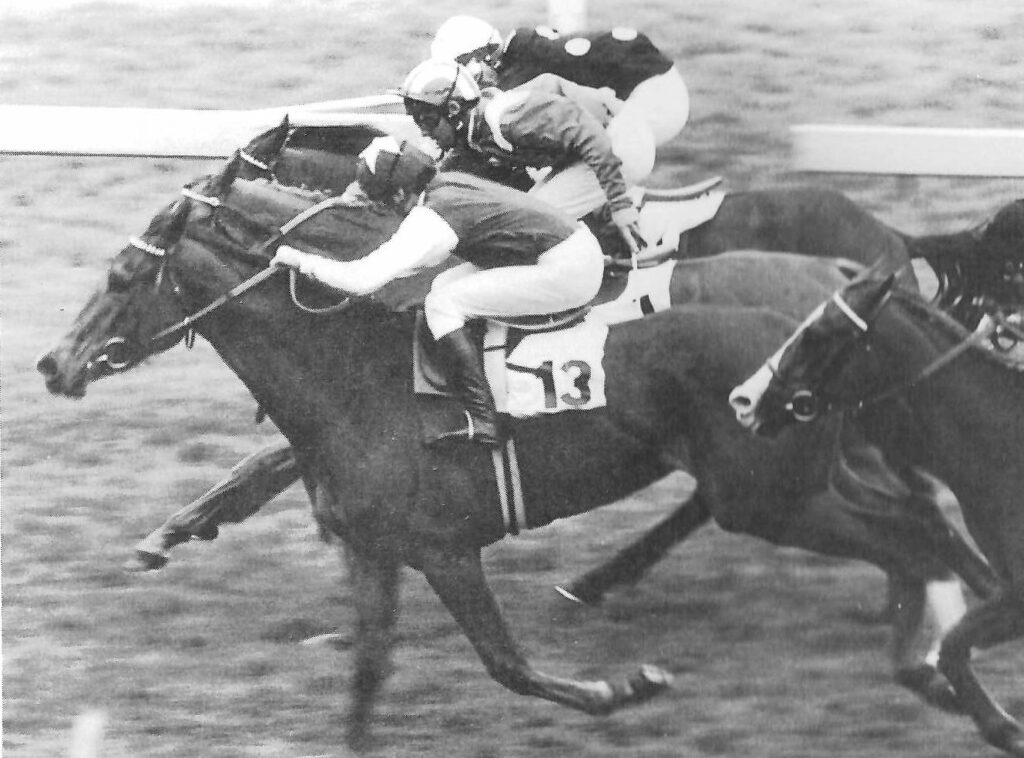
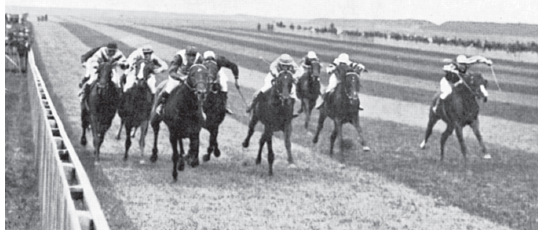
The Tetrarch (above) winning the Woodcote Stakes at Epsom and setting a new six furlong course record of 1 minute 7.6 seconds, beating Parhelion by three lengths.
Then at Ascot, in the Coventry Stakes, he annihilated six rivals to win by ten lengths.
To the sporting press, who had dubbed him as “The Rocking Horse”, he now became “The Spotted Wonder”.
Crowds flocked to Sandown to see his next race – the National Breeders’ Produce Stakes. But anticipating the start, he caught the tapes in his mouth, reared up and came down on his knees.
At half-way, his task looked impossible, but Donoghue got him balanced and won the race by a neck. For historians, however, it was his next race – the six-furlong Rous Memorial Stakes at Goodwood – that stands out. Conceding 13lb to the future One Thousand Guineas and Oaks winner Princess Dorrie, he won “in runaway style”, beating her by six lengths.
Further convincing victories followed in the Champion Breeders’ Foal Stakes at Derby, by four lengths, and in the Champagne Stakes at Doncaster, beating Stornaway (winner of the Prince of Wales’s Plate and Gimcrack Stakes at York), by three lengths. Soon after this, he rapped his off-fore fetlock in a home gallop and after treatment, was put away for the winter.
Rated at 9st 10lb in the Free Handicap, The Tetrarch was made winter favourite for both the Two Thousand Guineas and Derby.
Early in March, it was admitted that his injury was greater than thought at first, and eventually he was withdrawn from the Guineas. Finally, after rapping his off-fore again in early May, he was taken out of the Derby.
For the record, The Tetrarch ran only at 2 years and won all his 7 races incl. Woodcote Stakes, Coventry Stakes, National Breeders’ Produce Stakes, Sandown, Rous Memorial Stakes, Goodwood, and the Champagne Stakes, Doncaster.
The question raised was, could a horse with such speed have stayed the Derby distance? His trainer Atty Persse said, “There was no three-year-old in 1914, who would have been capable of extending him over any distance.”
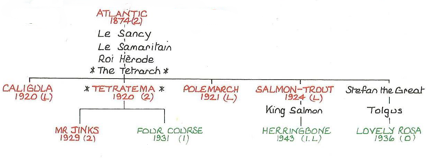
At his owners Ballylinch Stud in Co. Kilkenny, The Tetrarch showed little interest in mating and sired only 130 foals in about 20 years. However, his 80 winners included the 1920 Two Thousand Guineas winner Tetratema; three St Leger winners: Caligula, Polemarch and Salmon-Trout, ‘The Flying Filly’ Mumtaz Mahal, (Champion 2-y-o filly in 1923) and grandam of Mahmoud (1936 Derby).
The Tetrarch was Champion Sire in 1919, and between 1918 and 1927 he figured in the top dozen sires’ eight times.
The enigma of The Tetrarch was the extremes of his progeny, from the speed of Tetratema and Mumtaz Mahal to his three St Leger winners. For breeders, however, the mere presence of his grey gene in the pedigree was one of improvement.
Later in life his strange spots completely disappeared as he became entirely white. He was infertile for the last ten years of his life, and died on 8 August, 1935. Aged 24, he was buried at the Ballylinch Stud, County Kilkenny.
In the excellent book, “A Century of Champions” by John Randall and Tony Morris, The Tetrarch was rated the “Best Two-Year-Old of the Century”, ahead of Tudor Minstrel and Tetratema.
** 4 **
Tetratema (gr.c. 1917)
Following The Tetrarch, his son Tetratema was a worthy successor.
TETRATEMA, the best and fastest son of The Tetrarch, inherited all that was to be admired in “The Spotted Wonder”, but, with soundness and an on-going ability at stud.
His dam, Scotch Gift (b.f. 1907) by Symington, had been a useful two-year-old, winning four races. Later she bred seven winners, including a full brother to Tetratema – The Satrap – a winner of the July Stakes and the Richmond Stakes.
A grey colt born in 1917, Tetratema, was bred by Major Dermot McCalmont, trained at Stockbridge by Atty Persse and ridden by Brownie Carslake. Unbeaten in five starts as a juvenile, he won the first three of these – the National Breeders’ Produce Stakes, the Molecomb Stakes and Doncaster’s Champagne Stakes – by a distance of four lengths. And by now noted by every tout in the country, he took the Imperial Produce Plate at Kempton, conceding weight to two rivals, at odds of 7-100. Finally that year, he won the Middle Park Plate, beating Southern and three others by six lengths. At the end of the year, he was rated 12lb clear at the top of the Juvenile Free Handicap and turfites questioned whether he was a better colt than his illustrious sire.
The following year, after a surprise half-length defeat in the Greenham Stakes by Silvern (a full brother to Fifinella), he justified public support by winning the Two Thousand Guineas as the 2-1 favourite, leading from start to finish to beat Allenby and 15 other rivals.
Nevertheless, in spite of his sprint-bred pedigree, Tetratema started favourite for the Derby. However, soon after entering the straight, he was done for, finishing down the field behind Spion Kop, who benefiting from the early pace set a new course record.
That year, Tetratema went on to win a further three races from four starts: the five-furlong Fern Hill Stakes at Ascot, the six-furlong King George at Goodwood, beating the famous Diadem, then closing with an easy match victory over Britomart (rec. 21lb) in the Kennet Stakes (5f.) at Newmarket. His defeat came in the Eclipse Stakes when finishing unplaced to Buchan over a distance beyond his ability.
With lessons learned, Tetratema’s connections confined him to sprints for his final season and, running in four races, he won them all – the King’s Stand Stakes, the July Cup, another King George at Goodwood and finally the Snailwell Stakes at Newmarket.
Over his three seasons, he won 13 races and was never beaten in 12 starts over five and six furlongs.
At Stud he was Champion Sire in 1929, when Mr Jinks won the Two Thousand Guineas and Royal Minstrel won the Eclipse. These were his best two sons and both were greys. He also finished second in the Sires list three times: 1929, 1934 and 1936.
Tetratema died on 16 July, 1939 aged 22 years, and was buried at the Ballylinch Stud.
** 5 **
Le Sancy (gr.c. 1884)
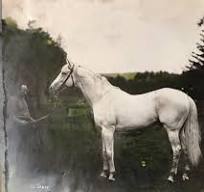
Returning to the male line to The Tetrarch, Le Sancy, owned and bred by Baron Arthur de Schickler in France, was by the 2,000 Guineas winner Atlantic (ch.c. 1871), out of Gem of Gems (gr.f. 1873).
Le Sancy won 27 races from 43 starts incl: Grand Prix de Deauville, (twice), Prix Daru, Prix des Sablonnes and the Grand Prix de Dieppe (twice). In 1911 he was the French leading broodmare sire.
Continuing the links in the chain, Le Sancy sired Le Samritain (gr.c. 1895), winner of 9 races from 28 starts incl: Grande Prix de Deauville, Prix Daru and Grand Prix Saint Leger de France and at stud sired Roi Herode.
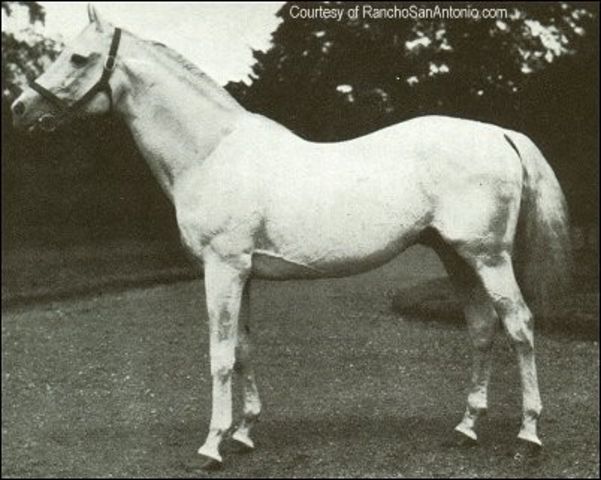
ROI HERODE (gr.c. 1904), sire of The Tetrarch, was bred in France by Maurice Caillaut.
He won only 3 races from 24 starts: Prix de la Neva, Grand Prix de la Ville de Vichy, Prix de la Table, and was second in Doncaster Cup.
But, in an attempt to revive the HEROD male line he was bought by Edward Kennedy for £2,000.
** 6 **
Tagalie (gr.f. 1909)
In 1912, TAGALIE was only the second grey to win the Derby and the fifth filly to do so.
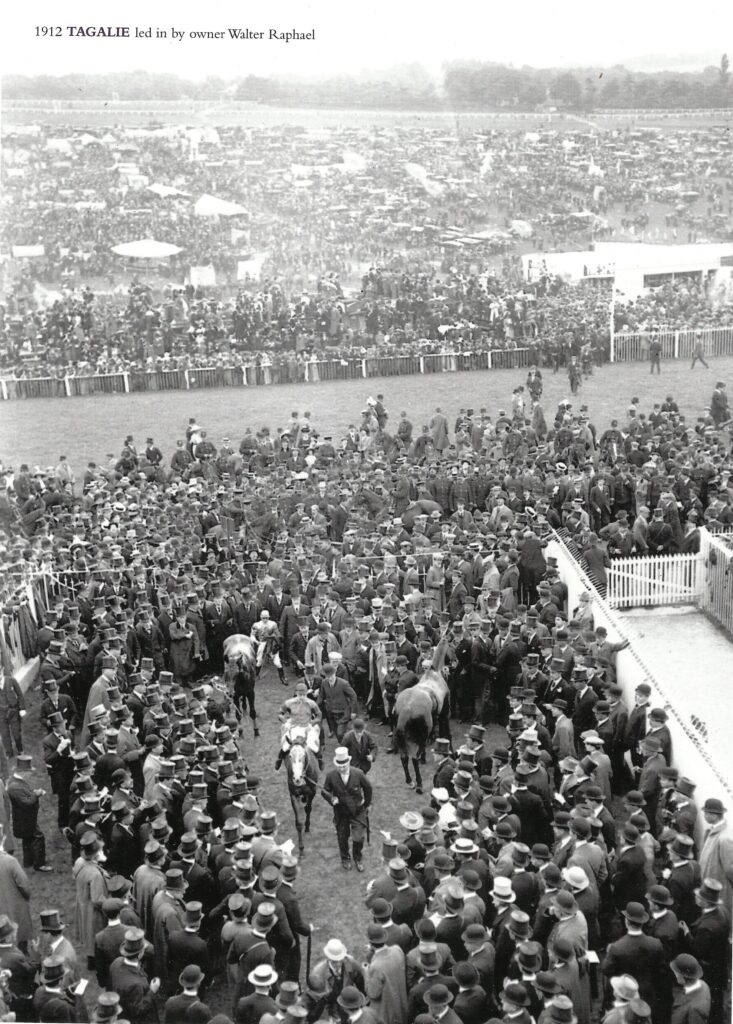
Mr Walter Raphael leads in his Derby winner Tagalie
Tagalie’s sire Cyllene, had three previous Derby winners Cicero (1905), Minoru (1909) and Lemberg (1910).
Her dam, Tagale, was bred in France and won two races before breeding seven winners from nine foals.
Walter Raphael (1862-1938), the owner/breeder of Tagalie, was a rich London financier, whose Louviers was beaten a short head by Minoru in the 1909 Derby.
Raphael had a private stable at Somerville Lodge, Newmarket, where he employed the trainer Dawson Waugh.
Tagalie made a winning debut in the Boscawen (Post) Stakes at Newmarket. Two weeks later she finished third to Belleisle in the Cheveley Park Stakes, before disappointing in a Maiden at Sandown.
On her three-year-old debut, however, Tagalie won the One Thousand Guineas at odds of 20-1, with the favourite Belleisle third.
Although her second in the Newmarket Stakes kept her in the Derby picture, the Two Thousand Guineas form dominated the betting, with the American-bred winner Sweeper 2-1 favourite and second placed Jaeger on 8-1. Tagalie was a popular each way bet at 100-8.
Tagalie was ridden by the American lightweight Johnny Reiff, who had won the 1907 Derby on Orby. Reiff gave a brilliant display of ‘waiting in front’ as Tagalie won by four lengths from Jaeger, with Tracery a further two lengths away third.
Two days later Tagalie returned for the Oaks as 1-2 favourite but, with George Stern now in the saddle, she was held back until Tattenham Corner and was soon beaten in the straight, finishing sixth to the 33-1 outsider Mirska. Further defeats followed when she ran unplaced behind Prince Palatine in the Eclipse Stakes and Tracery in the St Leger.
Retired to stud, Tagalie produced four winners of 12 races and died after foaling in 1920.
** 7 **
Mahmoud (gr.c. 1933)
The grey gene now continues from The Tetrarch to Mahmoud via his daughter Mumtaz Mahal and grand-daughter Mah Mahal
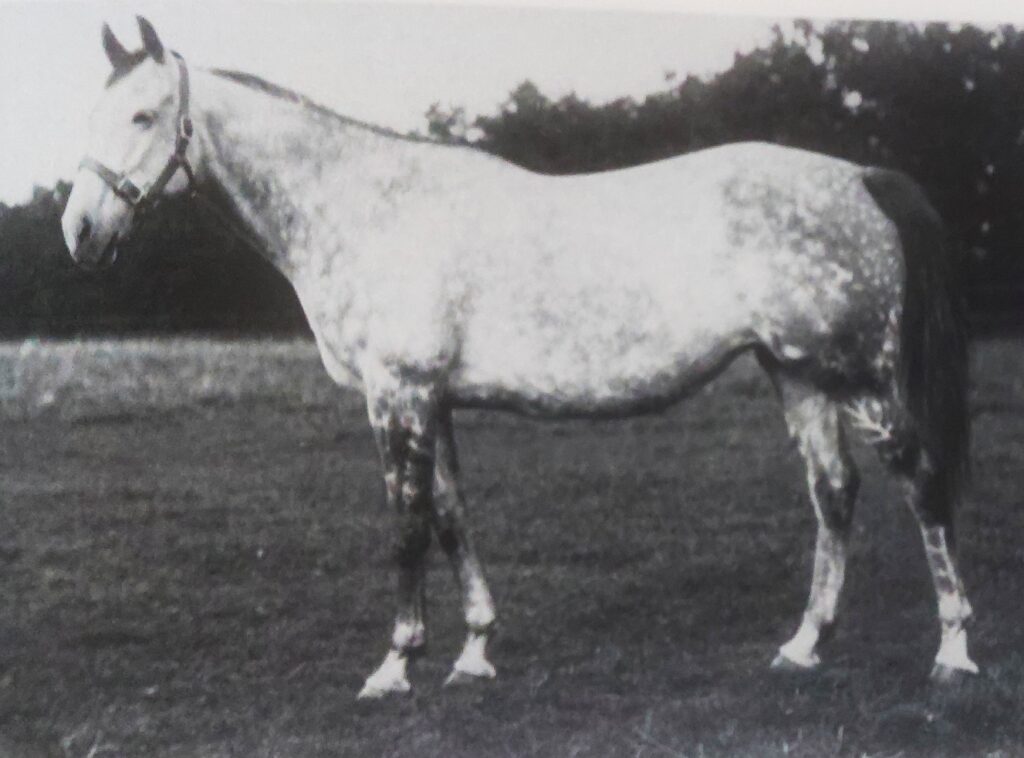
Mumtaz Mahal (gr.f. 1921)
MAHMOUD was a light grey colt of 15 hands 21⁄4 with a distinctive Arab-like head, a strong back and muscular quarters.Bred in France by the Aga Khan III and born in 1933, he was by the 1930 Derby winner Blenheim and the first foal of his dam Mah Mahal (by Gainsborough).
Trained by Frank Butters at Newmarket he won 4 races: Exeter Stakes, Newmarket, Richmond Stakes, Goodwood, Champagne Stakes, Doncaster, Derby Stakes. Second in Two Thousand Guineas Stakes, third in St Leger Stakes. Champion Sire in North America 1946.
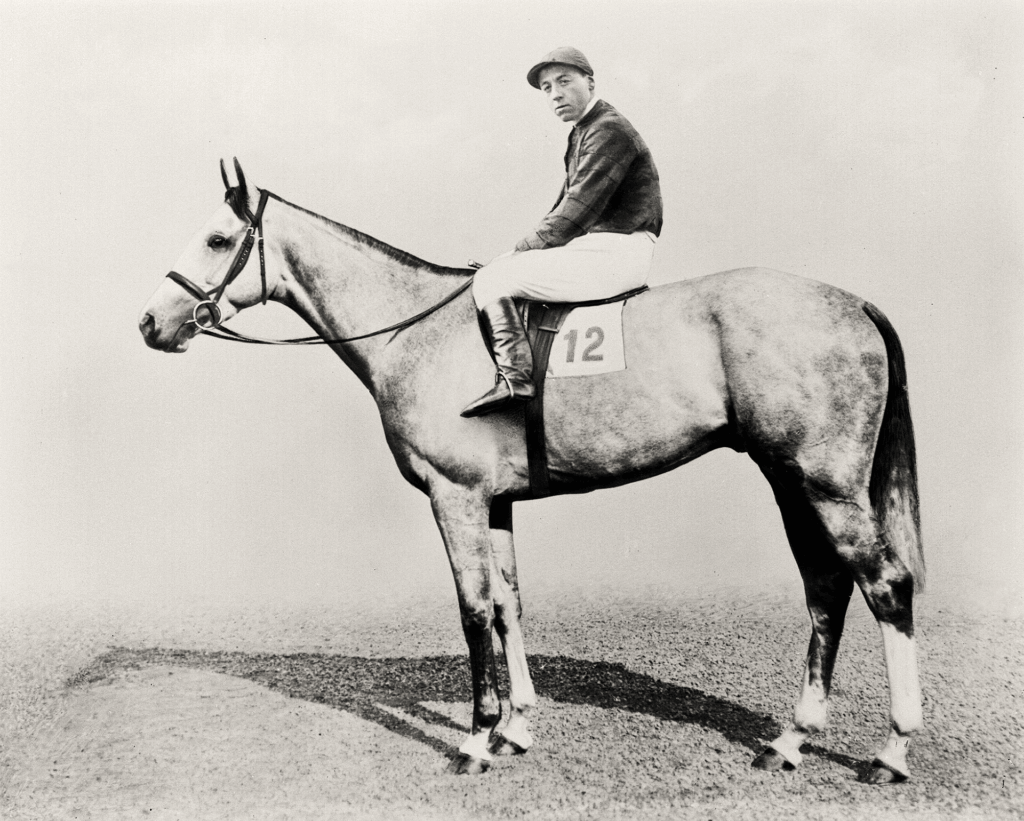
MAHMOUD with Charlie Smirke
It had been an exceptionally dry May and the official going on Derby day was firm, although in reality it was bone hard.
Pay Up, having beaten Mahmoud by a short-head in the 2,000 Guineas, was now the 5-1 Derby favourite, while Gordon Richards’ choice of three Aga Khan runners, was the Chester Vase winner Taj Akbar (6-1) above Mahmoud (100-8) and top juvenile Bala Hissar (100-6). Frank Butters’ fourth runner, Noble King, gave punters an each way chance at 9-1.
From a field of 22 although Thankerton led round Tattenham Corner, Mahmoud quickly made up ground entering the straight and bounded off the fast surface like a cricket ball on concrete, passing Thankerton two furlongs out. Taj Akbar ran on for second place but could not get to Mahmoud, who won by three lengths in the new record time of 2 min 33.80 sec., unsurpassed for the next 60 years. Thankerton finished a brave third, a further three-quarters of a length away.
Feeling the effects of Epsom and conceding 7lb, Mahmoud was beaten five lengths by Rhodes Scholar in the St James’s Palace Stakes at Ascot.
Later, his preparation for his finale, the St Leger, was interrupted by an attack of heel-bug and he did well to finish third to Boswell.
Retiring to Egerton Stud at a fee of 300 guineas, Mahmoud was bought at the close of the 1940 season for $84,000 by Mr C.V. Cornelius Vanderbilt Whitney, a major player on the American turf, the movies and aviation. Sent to his stud in Kentucky, Mahmoud proved a great success becoming Champion Sire in North America in 1946. Among his prolific winners were:
OIL CAPITOL gr.c. 1947 ex NEVER AGAIN by PHAROS. He won 19 races incl. Flamingo Stakes,Widener Handicap, U.S.A.
COHOES b.c. 1954 ex BELLE OF TROY by BLUE LARKSPUR. He won 13 races incl. Brooklyn Handicap,Whitney Stakes, U.S.A.
THE AXE gr.c. 1958 ex BLACKBALL by SHUTOUT He won 15 races incl. Imperial Stakes, Kempton, Newmarket Stakes, San Luis Rey Handicap, Man o’War Stakes, and the Canadian Championship Stakes.
** 8 **
Addenda
Of the 11 grey winners of the St Leger, none produced a Classic winner.
Although Airborne, who also won the 1946 Derby, sired Silken Glider to win the 1957 Irish Oaks and finish second in the Oaks at Epsom.
The seventh and and only grey Champion Sire of G.B. & Ireland, since Tatratema, was Dark Angel (gr.c. 2005), who traces back in unbroken line 11 generations to The Tetrarch.
Of the eight grey Kentucky Derby winners, six trace back to Mahmoud and the other two to The Tetrarch by a different rout.
Mahmoud died on 18 September, 1962 and is buried in the equine cemetary on Gainsway Farm, near Lrxington, Kentucky.
If there is to be a resergence of the grey gene in our Classic winners you can be sure that either Mahmoud or The Tetrarch will figure in their pedigrees.
For those who like to leave with a smile, the grey gene of the famous chaser, Desert Orchid, goes back 300 years without a break, to our start with the Alcock Arabian.
Thus concludes our journey with the grey gene through the Thoroughbred racehorse
(2820 words)
For more Racing History see Michael’s Books for Sale.